Created 2023/02/13
Updated 2023/05/18
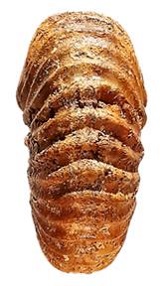
Sonneratia (Sonneratia) dutempleana (d'Orbigny, 1841)
| Measurements |
D mm | H/D | T/D | O/D | H/T |
|---|
| CP-375/61 |
41 | 0.43 | 0.48 | 0.29 | 0.89 |
| Lectotype MNHN |
67 | 0.45 | 0.52 | 0.31 | 0.87 |
| 2585 Saveliev |
75.5 | 0.44 | 0.45 | 0.30 | 0.98 |
| Age |
Origin |
|---|
Mangystau: O. sinzowi zone,
P. (H.)puzosianus subzone.
England, France: puzosianus
zone. Lower Albian
|
North-Aktau Ridge
Mangystau Peninsula
Kazakhstan
|
Description.
Subhexagonal whorls overlapping by two-thirds. Slightly depressed section, thickest at the umbilical bullae, with flattened flanks converging towards a broad, slightly convex venter. Umbilicus extending over one-third of the diameter, with a high, steep wall and a rounded edge. This wall flattens and becomes less steep (50°) on the body chamber, which is preserved on the last quarter of whorl. Fifteen prominent umbilical bullae from which arise pairs of slightly proverse, arched ribs, with a few simple ribs (32 ribs in total on the last whorl). These ribs reach their maximum height on the venter, which they cross with a rounded sinus at 130°. Their cross-section is asymmetrical, with a steeper rear slope than front slope, but this feature reverses on the body chamber.
Remarks.
A species from England, the Paris Basin, and Mangystau. Its proportions are very stable on 10 measured specimens: O/D = 0.29–0.32, 28 to 32 ribs, and H/T ≤ 0.98. Before reaching 3 cm, the venter is oval, as in Eosonneratia. Then it becomes hexagonal. In the senile stage, the tubercles become large, elongated ridges that bifurcate at mid-flank.
Some authors assign to S. dutempleana some forms larger than 6 cm with a still-rounded venter, such as that in plate 88, fig. 2 of Casey (1965), which Saveliev (1992) finds doubtful, and that in plates 4–8, fig. 4 of Destombes in Rat et al. (1979). These specimens lack the hexagonal whorl section defined by the genus.
The MNHN database of types illustrates the lectotype found in Novion-Porcien in the Ardennes (de Vibraye collection no. B14687).