Definition of an ammonite zone. Ammonite zonation of a geological stage is a division into successive zones, each defined by the presence of one or more species. On the field, a zone corresponds to a layer of sediment and a relative time interval. Two simple ways to define a zone are the abundance of a species and the association of certain species. An abundance zone is a level where an ammonite is very common. An association zone (or assemblage zone) is defined by the simultaneous presence of several species. The problem with these zones is the fuzzy boundary between them. For example, an ammonite may still be present, but less frequent, above its abundance zone.
An interval zone (IZ) is defined by the appearance and/or disappearance of a species. The simplest is a closed interval called the total range zone (TRZ), between the appearance and disappearance of the same species: this is the case of the Anahoplites intermedius zone. Since TRZs can overlap, three other types of intervals are used. Closed at the bottom but open at the top, between the appearance of the current zone ammonite and that of the next zone ammonite: Otohoplites subhilli zone. Open at the bottom but closed at the top, between the disappearance of the previous zone ammonite and that of the current zone: Hoplites benettianus zone. Open on both sides, also called a partial range zone (PRZ), between the disappearance of the previous zone ammonite and the appearance of that of the next zone: Hoplites dentatus zone.
Phyletic zonation. The phylogenetic zonation was proposed by Amédro (1992) for the Albian of the Anglo-Paris Basin. It is based on interval zones, with selected ammonites reflecting the evolution of the Hoplitidae. The table on the right lists these zones, with asterisks indicating the ammonites pictured on this site (see the list of genera). For a long time, the first zone of the Middle Albian was the dentatus zone, but since Birkelund et al. (1984), it is the lyelli subzone of the benettianus zone. The Lower Albian therefore ends with the pseudolyelli subzone of this zone. We specify the boundaries of each zone below, from bottom to top, along with some other ammonites characteristic of the Aube department.
The yellow zones are those of the 1992 zonation and concern the Anglo-Paris Basin. To extend the zonation to Western Europe, Amédro & Robaszynski (2000) added the upper blue zone with Arraphoceras briancensis. This ammonite is found, for example, near Hanover in Germany and in the Rhône Valley (Marcoule, Salazac). However, the new zone corresponds to a gap in sedimentation between the Albian and Cenomanian stages in the Paris Basin. The Mortoniceras rostratum zone was inserted by Kennedy & Latil (2007), following the study of the Albian deposits from Montlaux in the Hautes-Alpes.
Leymeriella (Leymeriella) tardefurcata Interval Zone. From the appearance of L. (L.) tardefurcata to that of L. (N.) regularis. In the Aube region, this zone is condensed with the following one of L. (N.) regularis. First occurrence of Beudanticeras newtoni, Desmoceras latidorsatum (which will span the entire Albian) and Hamites sp. Other species: Hypacanthoplites milletioides and milletianus.
Leymeriella (Neoleymeriella) regularis Interval Zone. From the appearance of Leymeriella (N.) regularis to that of Sonneratia kitchini. Douvilleiceras leightonense is found from the top of this zone.
Sonneratia kitchini Interval Zone. From the appearance of Sonneratia kitchini to that of Cleoniceras floridum. Index ammonite known in England, Ardennes, and Bec-de-Caux in Normandy, but not in Aube. First occurrence of Douvilleiceras mammillatum and D. inaequinodum. D. mammillatum will survive up to the benettianus zone, defining the large mammillatum superzone of English authors. Associated species: other involute and more or less thick Sonneratia, such as S. perinflata and S. rotator type.
Cleoniceras floridum Interval Zone. From the appearance of Cleoniceras floridum to that of Protohoplites (Hemisonneratia) puzosianus. Associated species: Tegoceras mosense, Sonneratia flava, S. vnigri, Pseudosonneratia crassa, P. jacobi. First Cleoniceras cleon and Neosaynella inornatum.
Protohoplites (Hemisonneratia) puzosianus Total-Range Zone. Vertical extension ofP. (H.) puzosianus. Other species: compressed Sonneratia like S. tenuis or with flattened venter like S. dutempleana, Pseudosonneratia sp., Protohoplites (P.) archiacianus, P. (P.) gallicus, P. (P.) michelinianus, Tetrahoplites subquadratus, Otohoplites raulinianus, O. waltoni and O. auritiformis (the latter at the top of the zone). In the 1992 phylogenetic zonation, this zone was followed by a zone with Otohoplites larcheri (junior synonym of O. waltoni) and a zone with O. auritiformis. The three zones were merged by Amédro et al. (2000).
Otohoplites subhilli Interval Zone. From the appearance of O. subhilli (from which Otohoplites bulliensis is a junior synonym) to that of Hoplites (Isohoplites) steinmanni. The species Otohoplites normanniae defines a horizon at the top of this interval. Emergence of Protanisoceras and Beudanticeras laevigatum. Last zone for Cleoniceras cleon. Other species: Uhligella sp.
Hoplites (Isohoplites) steinmanni Total-Range Zone. Intervalle equivalent to the vertical extension of H. (I.) steinmanni. The Hoplites with a narrow ventral sulcus like H. (H.) benettianus and its variants are found from the base of the zone. Otohoplites normanniae vanishes in the middle part. Last zone for Beudanticeras newtoni and Neosaynella inornatum. Other species: Lyelliceras vaasti, Tegoceras camatteanum, Cleoniceras devisense.
Hoplites (Hoplites) benettianus Interval Zone. Interval with two subzones extending from the disappearance of H. (I.) steinmanni to that of H. (H.) benettianus. The subzone with Lyelliceras pseudolyelli marks the end of the Lower Albian and corresponds to the lower part of bed A at Courcelles. The following subzone with Lyelliceras lyelli begins the Middle Albian and corresponds to the middle and upper parts of bed A and to bed B. Last zone for Beudanticeras laevigatum. Other species: Pseudobrancoceras versicostatum, Brancoceras flexuosum and multicostatum, Oxytropidoceras sp., Douvilleiceras clementinum. Last zone for Douvilleiceras mammillatum and D. inaequinodum.
Hoplites (Hoplites) dentatus Partial-Range Zone. From the disappearance of H. (H.) dentatus to the appearance of Anahoplites intermedius. Douvilleiceras clementinum is still present at the base and then disappears. Hoplites (H.) rudis, canavarii, and latesulcatus occupy the upper part. Last zone for Protanisoceras.
Anahoplites intermedius Total-Range Zone. Interval corresponding to the total range of A. intermedius. Other species: Anahoplites osmingtonensis and Euhoplites loricatus. First occurrence of Anahoplites planus.
Dimorphoplites niobe Interval Zone. From the disappearance of A. intermedius to that of D. niobe. Other species: Dimorphoplites with irregularly lautiform ribs, type D. doris.
Dimorphoplites biplicatus Interval Zone. Last zone of Middle Albian, from the disappearance of D. niobe to the appearance of Dipoloceras cristatum. Species: Dimorphoplites with regularly lautiform ribs like D. biplicatus and its variants, first Euhoplites with a thin siphonal channel like E. lautus. Anahoplites daviesi at the top of the interval.
Dipoloceras cristatum Interval Zone. First zone of Upper Albian, from the appearance of D. cristatum to that of Mortoniceras pricei. Emergence of Beudanticeras beudanti. Other species: Euhoplites lautus again, but also Euhoplites with fine ribs such as E. ochetonotus and E. silenus, Metaclavites compressus.
Mortoniceras pricei Interval Zone. From the appearance of M. pricei to that of Mortoniceras inflatum. M. pricei is the first representative of the genus, with two tubercles per rib. Last zone for Beudanticeras beudanti. Associated species: Euhoplites inornatus, Hysteroceras sp., Prohysteroceras (Goodhallites) goodhalli.
Mortoniceras inflatum Interval Zone. From the appearance of M. inflatum to that of Mortoniceras fallax. M. inflatum is the first Mortoniceras with three tubercles per rib, the lateral tubercle diminishing with age. Last zone for Anahoplites planus. Associated species: Hysteroceras sp., Callihoplites auritus, Neoharpoceras sp.
Mortoniceras fallax Interval Zone. From the appearance of M. fallax to that of Mortoniceras rostratum. M. fallax has three tubercles per rib, the lateral one remaining well-defined. Associated species: Callihoplites, Lepthoplites, Pleurohoplites sp., Arraphoceras substuderi. No macrofauna from this area has been observed in the Aube department.
Mortoniceras rostratum Interval Zone. From the appearance of M. rostratum to that of M. perinflatum. This zone was introduced by Kennedy and Latil (2007). The index species has four tubercles per rib, decreasing to three at the end of the body chamber. It has not been found in the Aube region due to a lack of outcrops.
Mortoniceras perinflatum Interval Zone. From the appearance of M. perinflatum to that of the first Cenomanian Mantelliceras. This species has ribs with four persistent tubercles. Other species: Stoliczkaia dispar, Callihoplites vraconensis. The layers from the fallax zone to the briacensis zone constitute a substage, the Vraconnian. As it is as thick as the rest of the Albian in southeastern France and is well-developed in other regions of the world such as California and Tunisia, Amédro (2002) proposed that it be considered a separate stage.
| Albian | Zones and subzones | |
|---|---|---|
| Upper | Arraphoceras (Praeschloenbachia) briacensis | Mortoniceras (Subschloenbachia) perinflatum |
| Mortoniceras (Subschloenbachia) rostratum | ||
| Mortoniceras (Mortoniceras) fallax | ||
| Mortoniceras (Mortoniceras) inflatum * | ||
| Mortoniceras (Mortoniceras) pricei * | ||
| Dipoloceras cristatum * | ||
| Middle | Dimorphoplites biplicatus * | |
| Dimorphoplites niobe | ||
| Anahoplites intermedius * | ||
| Hoplites (Hoplites) dentatus * | ||
| Hoplites (H.) benettianus * | Lyelliceras lyelli * | |
| Lower | Lyelliceras pseudolyelli * | Hoplites (Isohoplites) steinmanni * |
| Otohoplites subhilli * | ||
| Puzosia (Hemisonneratia) puzosianus * | ||
| Cleoniceras floridum | ||
| Sonneratia kitchini | ||
| Leymeriella (Neoleymeriella) regularis | ||
| Leymeriella (Leymeriella) tardefurcata | ||
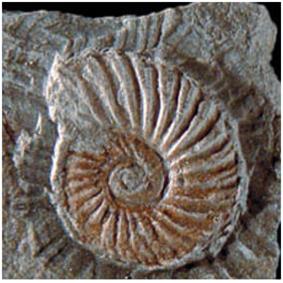
(Bert, 2012). The species indicates the base of Albian.
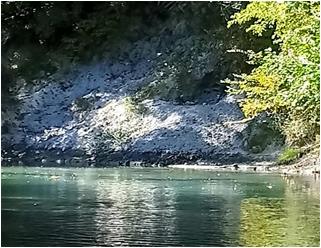
Mortoniceras pricei zone
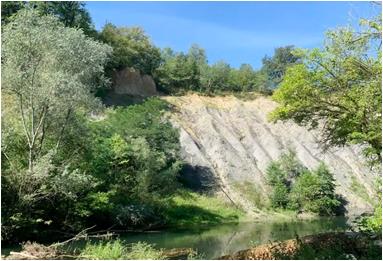
From lowermost Albian to lyelli subzone
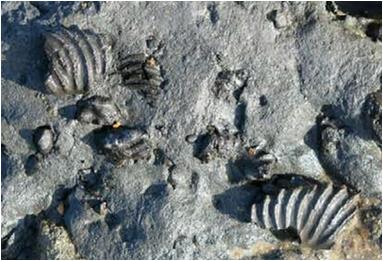
Hoplites dentatus zone (Amédro & Matrion, 2023)