Created 2025/07/03
Updated 2025/11/18

Researchers on the Albian

This page presents short biographies of 29 selected paleontologists who have significantly contributed to the study of the Albian. All are cited in our data sheets on the different species of ammonites. The reader will find the publications cited on our References page. The biographies are listed in alphabetical order by last name, with a Comments section which reflects only my personal opinions. Many of these colleagues have disappeared since 2000, which is tragic. Others are retired but often keep a status of emeritus professor and continue their research. But where is the next generation?


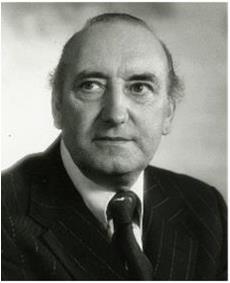
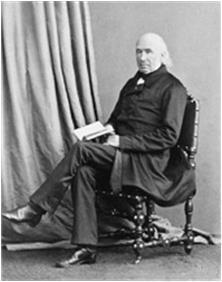
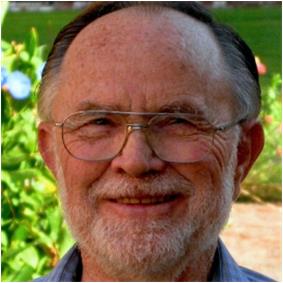
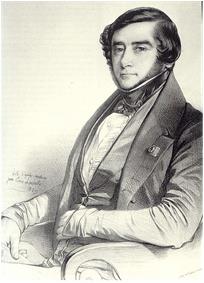
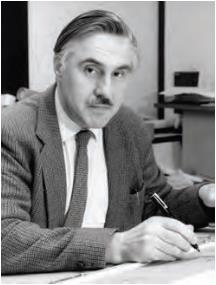
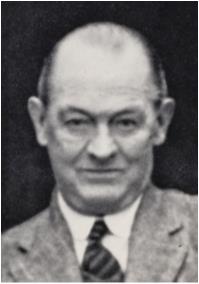
Francis AMÉDRO

Amedro

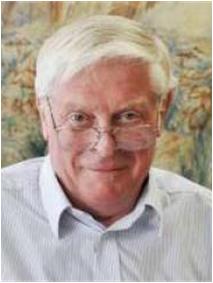
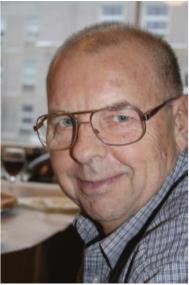
Born in 1953, the French ammonite specialist Francis Amédro led a dual career of college professor of natural sciences in Calais and paleontologist. His meetings in the 1970s with Pierre and Jean-Paul Destombes motivated him to research in paleontology. He first worked on the Cretaceous of Northern France (including the Albian of Wissant), then on the Albian of the Paris Basin in general, the Rhône valley, Tunisia and California, establishing correlations. He has acquired an international reputation on the Albian and, more recently on the Turonian, being author or co-author of 160 publications. Let us cite his phyletic zonation of the Albian of the Paris Basin (1992), very practical on the field, and his detailed analysis of the Middle Albian of Aube in 123 pages (2014), with numerous plates of ammonites. The Albian being the longest stage of the Cretaceous, he wrote a argumented advocacy to elevate the terminal Albian (Vraconnian) to the rank of a full stage (2002). F. Amédro is an associate researcher of the Biogeosciences Laboratory at the University of Burgundy in Dijon, and a scientific collaborator at the Polytechnic Faculties of Mons. He received the Class of Sciences prize from the Royal Academy of Belgium, worked as a consulting geologist for Eurotunnel, and chaired the Société Géologique du Nord from 2008 to 2011. Retired from teaching since 2015, he bequeathed his collection to the Natural History Museum of Lille but continues his research.

Comments. My references page cites 23 of his articles, the ones devoted to Albian. I learned a lot from reading them. Very clear, they are essential for finding your way around the Albian of the Paris Basin and determining the ammonites. Francis simplified the systematics of Albian ammonites and introduced simple, practical and discriminating identification criteria. Despite his retirement, Francis is very active and often absent for field studies, in France and abroad. He still finds the time to respond with kindness and formidable efficiency when I cannot identify an ammonite!
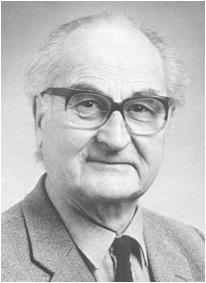
Charles BARROIS

Barrois

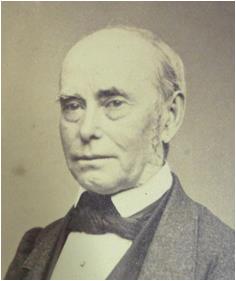
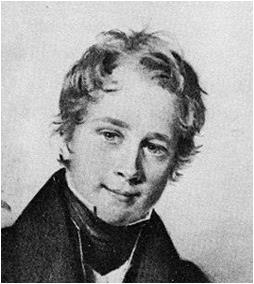
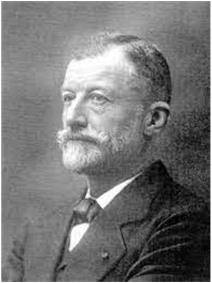
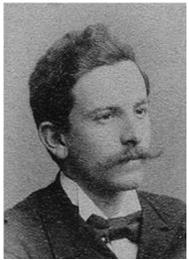
Charles-Eugène Barrois (1851-1939) is a world-renowned French geologist, very attached to his birth department, the North. He obtained his thesis in 1876 in Lille, on the Upper Cretaceous of England and Ireland, under the supervision of Jules Gosselet with whom he founded the Société Géologique du Nord. He was appointed lecturer at the Faculty of Sciences of Lille in 1878, then holder of the chair of geology (after Jules Gosselet) from 1902 to 1926, the year of his retirement. He chaired the French Geological Society six times and became a member of the Academy of Sciences in 1904. He realized, most often alone, the geological map at 1/80,000 for all of French Brittany, almost 20 sheets published from 1885 to 1909! He then directed the detailed prospection of coal in Northern France and then, after the First World War, in Lorraine and Saarland. Polyglot, he translated into French the four volumes of the famous Handbuch der Paläontologie by Zittel. He is included in our list of Albian paleontologists for his study of the Gault of the Paris Basin (1875) and his Memoir on the Cretaceous layers of the Ardennes and neighboring regions (1878). The latter includes a large chapter on Albian outcrops in northern France, with reference sections and lists of fossils. It was Barrois who defined, in the Albian of Yonne, the Sables des Drillons formation and the Sables de Frécambault formation.

Comments. I was unable to find his complete list of publications, but the French National Library (BnF) already cites 42.


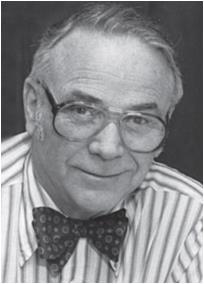
Guido BONARELLI

Bonarelli

Guido Bonarelli (1871-1951) was an Italian geologist, paleontologist and anthropologist. Graduated in Natural Sciences from the University of Turin in 1891, he was introduced to paleontology by one of his professors, Carlo Fabrizio Parona. Teacher and researcher in Turin, Bologna then Perugia, he wrote more than 200 publications, the first in 1891, including several with Parona. He studied in particular the geology of the central Apennines, Lombardy, Savoy and the Nice region. He was the one who identified (1891) at Gubbio the layer that bears his name, marking the Oceanic Anoxic Event No. 2 (OAE 2), at the Cenomanian-Turonian boundary. From 1901 onwards, he focused on geology and oil exploration in Indonesia, Bolivia, and Argentina for Royal Dutch (later Shell). He is cited here for his famous study of the Albian fossils from Escragnolles (Var, France), published in 1897 with Parona. In this study the two authors created the genera Cleoniceras and Falloticeras, as well as the ammonite species Puzosia quenstedti and provincialis, Douvilleiceras inaequinodum, Lyelliceras pseudolyelli, Hoplites canavarii, mirabilis and rudis, and Epihoplites (Metaclavites) compressus. In a 1921 work with Nágera in Argentina, he defined the type of genus Aioloceras, A. argentinum.

Comments. Paleontology is not supported enough in France. One consequence is that it is foreigners, fortunately talented ones, who come to study our important outcrops in southeastern Alps, such as Gale, Kennedy, and others for the Aptian-Albian boundary at the Col de Pré-Guittard and at Tartonne (2000), and the Albian-Cenomanian boundary at Mont-Risou (1996). This is not a recent trend, since Escragnolles was studied by the two Italians Bonarelli and Parona for the first time!


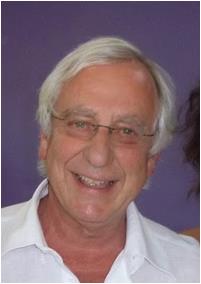
Maurice BREISTROFFER

Breistroffer

Maurice André Frantz Breistroffer (1910-1986) was a French botanist, entomologist, and paleontologist. After a degree in natural sciences, he worked at the Grenoble Geology Laboratory under the direction of Maurice Gignoux and Léon Moret. In 1940, he was appointed curator of the Grenoble Museum of Natural History, a position he held until his retirement in 1978. He joined the CNRS (French National Centre for Scientific Research) after the war. In paleontology, Breistroffer focused his work primarily on the Lower Cretaceous period in southeastern France, specifically in the southeastern Alps. Regarding the Albian, he studied the strata of the Chartreuse Mountains (1933), the subdivisions of the Vraconian (1936a), the correlations between the Anglo-Paris Basin and the Mediterranean zone (1947), and the ammonites of Peille (1953). He also worked on the Albian ammonites of Madagascar (1936b, 1936c). His major work of 1947 shows that the Clansayesian, placed in the Albian by d'Orbigny and Jacob, belongs to the Aptian. He also proposed a zonation of the Albian with lists of ammonites for each zone, supplementing the ammonites from Spath with species from southeastern France. He created the genera Neosilesites and Salaziceras, as well as species such as Beudanticeras albense, Sonneratia perinflata, and Hoplites spathi.

Comments. I had difficulty finding a photograph. Breistroffer's writings are often hard to understand if you don't have all the classics on ammonites at hand. Indeed, he often creates a species by citing a specimen illustrated in another publication, without recalling the diagnosis. Furthermore, he rarely includes a bibliography at the end (only a few references are specified in footnotes), measured sections, figures within the text, and plates of specimens!


Raymond CASEY

Casey

Casey (1917-2016) lived in Folkestone, England, and had been collecting Gault fossils since childhood. He turned to research on Spath's advice. Recruited after the Second World War by the British Geological Survey (the equivalent of the French BRGM), this high-level paleontologist obtained his PhD in 1958 but began publishing as early as 1936. Although he worked on several geological stages and wrote over 100 publications in total, his best-known work is The Ammonoidea of the Lower Greensand (1960-1980), a richly illustrated nine-part monograph on the ammonites of the English Albian sands. For example, he created the sub-genus Neosaynella of genus Cleoniceras, and more than 140 species, including the following: Beudanticeras (Beudanticeras) newtoni, Cleoniceras (Neosaynella) inornatum, Douvilleiceras alternans and leightonense, Protanisoceras coptense, Protohoplites (Hemisonneratia) cantianus, Pseudosonneratia acuta, crassa, jacobi, occidentalis and praedentata, Sonneratia caperata, Tetrahoplites occidentalis, and finally Uhligella derancei and subornata! Casey also refined the zonation of the English Aptian and Albian and established correlations with other regions of Europe, particularly northwestern Germany.

Comments. In my opinion, Casey is with Owen (and later Kennedy) the English paleontologist who brought the largest contribution to the study of Albian after the Second World War. I often use the volumes of Lower Greensand, which are packed with high-quality figures and plates, and include measurements of many specimens. They complement Spath's work well, as he only covers the more recent Gault clay. Although Casey has tended to define many species like Spath, his style is more precise and less verbose.


William COBBAN

Cobban

William Aubrey "Bill" Cobban (1916-2015) was an American paleontologist who worked extensively on the Cretaceous period in the United States, particularly the Late Cretaceous of the Western Interior Seaway. He even discovered a fossilized dinosaur as a teenager! He earned a Bachelor of Science degree in Geology from the University of Montana (1940) and a PhD from Johns Hopkins University (1949). He spent his entire career with the United States Geological Survey (USGS). A tireless fieldworker, he defined virtually all the 71 Late Cretaceous zones in the USA and introduced 32 genera and 215 species of ammonites! He is the author or co-author of 335 articles, notably with Amédro, Kennedy, and Reeside, and has compiled a database of 14,000 outcrops with GPS coordinates, aerial and satellite views, cross-sections, and faunal lists! His writings on the Albian focus on Texas, including a revised diagnosis of Mortoniceras equidistans (1985), correlations between Texas, the Western Interior Seaway, and Western Europe (1993), the Weno Limestone Formation (1998), Texas Engonoceratidae (1998), the Fort Worth area (1999), and the Main Street Limestone Formation (2005). He has also studied the Upper Albian of the Sarten Sandstone Formation in New Mexico.

Comments. This paleontologist has clearly accomplished a colossal amount of work, while also writing articles of great clarity. The Western Interior Seaway was a 1000 km was a sea that crossed Canada and the USA from north to south during the Late Cretaceous, running along the eastern edge of the present-day Rocky Mountains. It was incomplete during the Albian epoch, with a Canadian Gulf to the north and another to the south (Texas, New Mexico, Kansas, Oklahoma, Utah, and Colorado). The Albian sea therefore never covered the northern United States (Montana, North and South Dakota, Nebraska, Wyoming, etc.), which is primarily known for its Late Cretaceous ammonites.


Maurice COLLIGNON

Collignon

Endowed with a considerable capacity for work, Maurice Collignon (1893-1978) pursued the careers of both general in the French army and paleontologist! He devoted himself entirely to paleontology upon his military retirement in 1950. He studied the ammonites and echinoids of Madagascar, initially using material brought back by the geologists Saint-Ours and Besairie, and later during four six-month stays, from which he returned with 500 crates of fossils! From 1958 to 1971, Collignon published the Atlas of Characteristic Fossils of Madagascar in 18 volumes and became a world-renowned specialist in ammonites. His work on the Albian includes fossils from four Malagasy localities (Ambarimaninga, 1949; Mokahara and Komihevitra, 1950; Andranofotsy, 1951), and later Volume X of his atlas (1963). Collignon also developed a zonation of the Malagasy Albian. In the 1960s and 1970s, he collaborated with numerous authors to study the faunas of other regions of the world: the Tarfaya Basin (Spanish Sahara, since annexed by Morocco), the Algerian Sahara, Angola, Mozambique, New Caledonia, Spain, and Turkey. His collection, formerly housed at the École des Mines in Paris, is now held at the University of Burgundy in Dijon. Co

Comments. His publications are essential for identifying Malagasy Albian ammonites, which are often seen at fossil exhibitions and on the Internet. Unfortunately, the plates in the Atlas, printed in Madagascar, are of poor quality due to the young republic's lack of resources after independence. Many new species are illustrated, but without a diagnosis or with only a cursory description. The zonation of the Malagasy Albian is still somewhat imprecise, as it is based on association zones. Furthermore, revisions such as those by Riccardi and Medina (2002) and Kennedy and Klinger (2012) must be taken into account. For example, Cleoniceras besairiei has been transferred to the genus Aioloceras, but many Malagasy ammonite sellers still use the obsolete name.


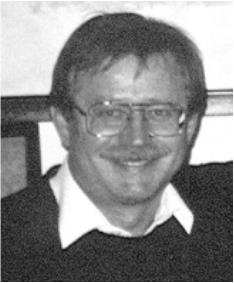
Michael Robert COOPER

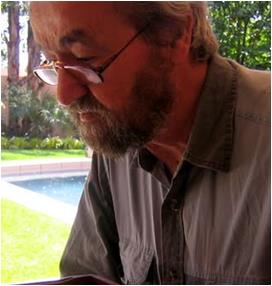
Cooper, born in 1947, is the best-known South African paleontologist along with Klinger. After his bachelor's and master's degree from the University of Natal, he went to Oxford, England, to obtain his doctorate (1977). He returned to South Africa to become a paleontologist at the Queen Victoria Museum in Salisbury, Zimbabwe, where he studied dinosaurs, birds, and turtles. He then joined the University of Durban-Westville, South Africa, where his research focused primarily on stratigraphy, ammonites, bivalves (trigonians, oysters), and brachiopods. Since his early retirement in 2002, he has been an honorary curator of paleontology at the Durban Museum of Natural Sciences and an emeritus professor of geology at the University of KwaZulu-Natal (a merger in 2010 of the universities of Natal and Durban-Westville). He has authored 140 publications, including 4 books. His most recent work (2024) offers a more modern alternative to Wright's Treatise on Cretaceous ammonites (1996), notably by illustrating the sutures of all genera. Regarding the Albian, his articles on the Losenstein beds in Austria (1977), the ammonites of Angola (1979, 1982), and the Scaphitidae of Cambridge Greensand (1990) are particularly noteworthy. Like Klinger, he wrote extensively with Kennedy.

Comments. I couldn't find a photo, if somebody has one for me... Cooper and Owen published three surprising articles that overturn the classification of Albian ammonites, for the precursors of the Placenticeratidae (2011a), the Hoplitidae (2011b), and the Sonneratiidae (2013). For example, the article on the Hoplitidae defines new genera based on phylogenetic criteria, including Amedroites for Hoplites benettianus and its variants. Francis Amédro couldn't have asked for more! It seems that these very (too?) radical revisions are not yet accepted by many paleontologists. However, they are already taken into account in Klein's Fossilium Catalogus volume on the Hoplitoidea (2014).


Jim CRAIG

Craig

Jim Craig (1933-2001) was an English amateur paleontologist from Folkestone. He worked primarily on the Gault clays of this locality, which allowed him to collect a large number of beautiful pearly fossils, mainly ammonites. He is honored here for his superb website, Fossils of the Gault clay & Folkestone beds of Kent, UK, with high-resolution color pictures. This site received the Golden Trilobite Award from the Palaeontological Association in 2004. Jim Craig bequeathed his collection to the Natural History Museum in London (formerly the British Museum of Natural History), which made it possible to provide lectotypes for several species of Spath, whose holotype had been destroyed by pyrite decay.

Comments. Jim's website is very useful for identifying ammonites from Folkestone and Wissant, or for visually confirming a preliminary identification. Since the author's death, it has been maintained by Fred Clouter, a fellow member of the Medway Fossil and Mineral Society. This commitment to continuity deserves to be highlighted, as too many websites disappear upon the death of their creator. While books several centuries old are still available in some libraries, it must be acknowledged that the question of the long-term preservation of website content is still neglected.


Pierre DESTOMBES

Destombes

Like Amédro and Collignon, the French scientist Pierre Destombes (1912-2002) pursued a dual career: he earned his doctorate in medicine in 1938 while simultaneously obtaining a degree in geology during his medical studies. He had a brother, Jean-Paul Destombes (1904-1974), a geologist, with whom he co-authored his first articles. A military physician overseas until 1957, he then became a researcher in infectious and tropical histology in Paris and was appointed professor of medicine in 1973, before retiring in 1977. He began publishing in paleontology in 1937, in the journals of the French Academy of Sciences, the Geological Society of the North, the Geological Society of France, and the Museum of Le Havre. Pierre Destombes worked on Albian sites in the Paris Basin: the Boulonnais region, the Pays de Bray (Bully), the quarries of the Aube, and the cliffs of the Pays de Caux. He is the one who created Otohoplites bulliensis, an ammonite renowned for its magnificent mother-of-pearl specimens from Bully. He proposed the first zonation of the Albian based on the Hoplitidae (1963). In the CNRS volume Albian of French stratotypes (Rat, 1979), he wrote a substantial chapter on the Aube ammonites of the Lower and Middle Albian. A world-renowned specialist in Albian ammonites, he considered Francis Amédro his scientific heir.

Comments. The 1979 chapter describes the now classic division of the Courcelles clays into a-b-c-d-e-f beds and offers beautiful photographs of the ammonites from Perchois (Aube), with new species such as Beudanticeras perchoiense, Cleoniceras ornatum, Sonneratia daguini, S. ciryi, Pseudosonneratia flexuosa, Otohoplites larcheri and Rossalites albini. According to Amédro (1992), O. bulliensis is a junior synonym of O. subhilli (Spath, 1942). Spath (p. 689) had created the latter under the name Dimorphoplites subhilli, designating as type the Hoplites teuthydis from Manguistaou illustrated by Sinzow (1909, pl. 3, fig. 19-20).


Andrew Scott GALE

Gale

Professor Andrew Scott Gale, aka "Andy," is an English specialist in the Cretaceous period. He was a professor of geology at the University of Greenwich and then, from 2007, at the University of Portsmouth. He has published over 200 articles on chalk stratigraphy, sedimentology, and paleontology, and created 252 new taxa (ammonites, bivalves, sea urchins, crinoids, starfish, barnacles, foraminifera, etc.). He has a particular interest in the chalk successions of Northwest Europe. He also worked on defining the Anthropocene as a new geological stage. Now retired, he holds the status of professor emeritus and continues his research. Andy Gale has mainly worked on the Cenomanian to Campanian stages, but he is co-author of several important publications concerning the Albian: one on the Aptian-Albian boundary at Col de Pré-Guittard and Tartonne in the Alps (2000), one on the upper Albian of Mont-Risou (in the Alps too, 2011), one on the upper Albian to lower Turonian layers of the Cauvery (or Kaveri) River basin in southern India (2019), four on Albian ammonites from Texas (1998, 1999, 2005, 2020), and one on a warming episode in the late Albian (2018). He also co-authored with Young, Knight and Smith a very good 372-page popular science book, richly illustrated, on the Folkestone Gault: Fossils of the Gault Clay, published by The Palaeontological Association (2010).

Comments. I haven't been able to find his date of birth.


Edmond HÉBERT

Hébert

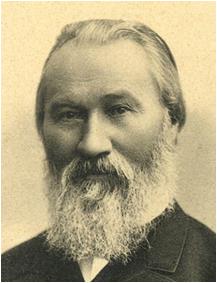
Edmond Hébert (1812-1890) was a chemistry lab assistant at the École Normale Supérieure in Paris before turning to geology rather late in life, since he publishing his first work at the age of 33. He defended his thesis on the Jurassic period of the Paris Basin in 1857 and was appointed to the chair of geology at the Sorbonne the same year. Elected to the French Academy of Sciences in 1877, he served three terms as president of the Geological Society of France. He organized and presided over the first International Geological Congress, held in Paris in 1878. He authored or co-authored 103 publications. Regarding the Albian, Hébert, along with Munier-Chalmas, created the Upper Albian ammonite Salaziceras salazacense, based on specimens from the Salazac deposit in the Gard department (1875). He also published two articles on the Albian of the Yonne department (1863, 1878). He was the one who defined the Argiles des Drillons formation in that department.


Charles JACOB

Jacob

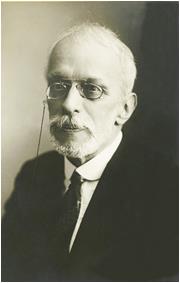
This great French paleontologist (1878-1962) graduated from the École Polytechnique and the École Normale Supérieure. Under the supervision of the renowned geologist Wilfrid Kilian in Grenoble, he earned his doctorate in 1907 on the stratigraphy and paleontology of the Cretaceous period in the Alps. He then became a professor at the University of Toulouse, and later at the Sorbonne University in Paris. Throughout his career, he undertook numerous missions for the French government, including coordinating water supply projects in the Gard and Lozère departments, creating geological maps, conducting oil exploration, and directing the Geological Survey of Indochina. He served as president of the Institut de France, the Geological Society of France, and the CNRS (National Center for Scientific Research). In the same year as his thesis (1907), he published a major study on the Cretaceous ammonites of southeastern France. Jacob was a very astute observer, who demonstrated in this study that certain genera of the period were heterogeneous, thus making decisive progress in the systematics of Cretaceous ammonites. For example, he created the Aptian-Albian genera Jaubertella, Leymeriella, Tetragonites and Uhligella, as well as new species of Gaudryceras, Lytoceras, Parahoplites and Sonneratia. He was the one who defined, for example, the Albian species Hoplites (Isohoplites) steinmanni, Leymeriella (Proleymeriella) schramenni, Sonneratia sarasini, S. parenti, Uhligella balmensis, U. clansayensis and U. rebouli.

Comments. Nobody is perfect: a scientist recognized by all and highly regarded by his students, Jacob had a reputation as a dictator and held very conservative views when he was director of the CNRS under the Vichy regime, from 1940 to 1944.


William James KENNEDY

Kennedy

Professor Kennedy joined the Department of Geology and Mineralogy at the University of Oxford in 1967, became Curator of Collections in 1976, and served as Director of the Oxford Museum of Natural History from 2003 to 2010. He is now retired but remains Professor Emeritus. Working primarily on older collections, including the huge Oxford reserves, Jim Kennedy authored 357 publications on Cretaceous ammonites, particularly those from the Cenomanian and Albian stages of the Anglo-Paris Basin, southeastern France, South Africa, Madagascar, and Kazakhstan. He revised numerous genera, having the excellent idea to take high-resolution pictures of old holotypes. He co-authored extensively with South African Herbert Klinger on the ammonites of KwaZulu-Natal (formerly Zululand), including many Albian species also found in Madagascar. Jim Kennedy also conducted fieldwork, notably two studies in the soustheastern Alps: on the Albian-Cenomanian boundary at Mont Risou in 1996, and on the Aptian-Albian boundary at Col de Pré-Guittard and Tartonne in 2000. Among the ammonites described from this site, he established the genera Umsinenoceras and Pseudobrancoceras, as well as the species Brancoceras flexuosum and multicostatum.

Comments. Undoubtedly the greatest and most prolific expert on Cretaceous ammonites today! My references page lists "only" 45 of his publications, those related to the Albian. Like Francis Amédro, I appreciate his radical but justified revisions, where he thoroughly cleans the taxonomy by reducing many "species" to variants of a few main taxa, while also writing clearer diagnoses. Despite his heavy workload, Jim has kindly helped me out several times with the identification of ammonites and has even mailed me some documentation. I haven't been able to find his date of birth — what a secretive fellow!


Herbert KLINGER

Klinger

Herbert Christian Klinger (1945-2024) was a South African paleontologist. He earned a PhD in Paleontology from the University of Tübingen (Germany) in 1972 and was a lecturer in the Department of Geological Sciences at the University of Cape Town (South Africa). Concurrently, he conducted research at the Iziko South African Museum, where he served as curator of the natural history collections. He also served as editor of the journal African Natural History, which replaced Annals of the South African Museum. Author of some forty publications, often with Kennedy, he primarily studied Lower Cretaceous ammonites from KwaZulu-Natal, South Africa. His publications on the ALbian include a synthesis of the Labeceratinae (1989), a review of the Roemer collection of Texas ammonites (1994), and revisions of the family Lyelliceratinae (2008), the genus Douvilleiceras (2015), and the subgenus Pervinquiera (Deiradoceras) (2023).


Alexandre LEYMERIE

Leymerie

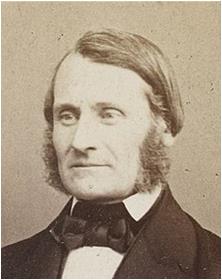
Graduate of the École Polytechnique, Leymerie (1801-1878) taught in Troyes and then Lyon, before being appointed professor of geology and mineralogy at the University of Toulouse in 1841. In Troyes, he distinguished himself by his social concerns, providing free evening classes in mathematics and mechanics to workers! He founded the Natural History Museum of Troyes in 1830, joined the Geological Society of France in 1834, and defended his doctorate in geology in 1840. He published an impressive treatise in 1841-1842 on the Cretaceous period in the Aube region, illustrated with numerous fossils. Despite his position in Toulouse, he maintained close ties with the Aube, where he kept in close contact with many people. In 1846, his Geological and Mineralogical Statistics of the Department of Aube was published, along with the first geological map of the department. He is credited with the identification of the Albian species Lyelliceras lyelli and Protanisoceras alternotuberculatum, but he is particularly known for his numerous bivalve species, as well as gastropods and sea urchins.


Ryszard MARCINOWSKI

Marcinowski

This Polish paleontologist (1946-2010) obtained his Master's degree in Geology with a thesis on the Jurassic of Poland, from the University of Warsaw in 1969, and his Doctorate on the transgressive Cretaceous (Upper Albian-Turonian) deposits on the Polish Jurassic chain, in 1974. He has been the editor-in-chief of the journal Acta Geologica Polonica since 1999, and a member of the Polish Academy of Sciences since 2004. Highly regarded in the international paleontological community, he primarily studied the Cretaceous period, including the Albian, initially in Poland and later in Crimea, Kazakhstan, Turkmenistan, and Madagascar. Richard Marcinowski led three expeditions to Mangyshlak (Kazakhstan) in 1991, 1992, and 1999, from which he brought back hundreds of fossils. He authored 42 publications between 1970 and 2009. His work on the Albian, notably his monograph with Wiedmann on the Albian ammonites of Poland (1990), and two articles on the Upper Albian of Mangyshlak (1983 and 1996), are particularly noteworthy.


Hardouin MICHELIN

Michelin

Born Jean-Louis Hardouin Michelin de Choisy, this finance inspector (1786-1867) also devoted himself to paleontology, botany, and malacology. He even achieved a recognized level of expertise, presiding the Geological Society of France in 1848. He is cited here for his publications of 1834 and 1838 on the Albian fossils from the old Gaty quarry in Géraudot, Aube, where French Albian ammonites were illustrated for the first time. In particular, he is the one who created Desmoceras latidorsatum, Phylloceras (Hypophylloceras) velledae, and Pseudobrancoceras versicostatum.


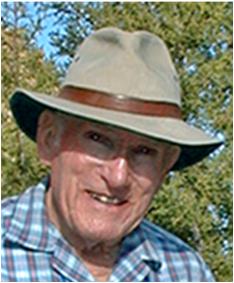
Michael MURPHY

Murphy

Michael Arthur Murphy is an American geologist and paleontologist born in 1925. He received his doctorate from the University of California, Los Angeles in 1954. He then pursued a career in the Department of Earth Sciences at the University of California, Riverside, near Los Angeles, from which he is now retired while remaining a professor emeritus. He worked primarily on the Lower Cretaceous of Northern California and on the Silurian and Devonian periods of the USA, particularly trilobites and conodonts. He is the author or co-author of 86 publications, the last of which was published in 2023, when he was 98 years old! Regarding the Albian of California, we can cite for example his articles on the genera Leconteites and Brewericeras (1965), the Tetragonitidae (1967), the discovery of occurrences of the genus Pictetia (1992), the creation of the genus Schuchmanoceras, an anisoceratid from the Upper Albian (1996), the Albian-Cenomanian boundary (1996), and the Phylloceratidae (2006). He revised the genus Beudanticeras with Latil (2023), reserving the name for Upper Albian forms such as B. beudanti and creating the new genus Roberticeras for all Lower and Middle Albian forms.


Alcide d'ORBIGNY

Orbigny

Alcide Dessalines d'Orbigny (1802-1857) was a French naturalist and paleontologist who made immense contributions. After working on foraminifera fossils, thus inventing micropaleontology, he undertook a long zoological expedition to South America from 1825 to 1833. This journey resulted in 11 volumes and 555 plates, praised by Darwin himself, and a collection of 9,000 animal and plant species. He subsequently proposed a classification of the Jurassic and Cretaceous periods into 27 stratigraphic stages, based on reference sections called stratotypes. Nineteen of these stages are still internationally recognized, including the Albian, defined in 1843. From 1842 to 1860 (the latter published posthumously), the nine volumes of his Paléontologie Française were published, comprising over 4,000 pages, 1,440 lithographs, and descriptions of 2,800 species. This monumental work is unfortunately unfinished. World-renowned, with streets and schools named after him, d'Orbigny also left behind an impressive fossil collection, housed now at the National Museum of Natural History (MNHN) in Paris.

Comments. Systematics has obviously evolved considerably since then. The volume of the Paléontologie Française on Cretaceous cephalopods was revised in a book coordinated by Fischer (2006), with excellent photographs of specimens from the d'Orbigny collection. These photographs show that d'Orbigny and his illustrator often embellished their plates, for example by extrapolating missing parts! A pioneer in his time, D'Orbigny struggled to gain recognition for the new science of paleontology. Furthermore, he unjustly suffered from the jealousy of his colleagues, who repeatedly blocked his applications to the Academy of Sciences and the Museum. He had to wait until 1853 for a decree by Napoleon III to finally appoint him professor to a new chair of paleontology created especially for him at the Museum. But he only held this position for four years.


Hugh Gwyn OWEN

Owen

Hugh Owen (1933-2022) was an English paleontologist with a doctorate from King's College London (1969) and a researcher at the British Museum of Natural History. A renowned specialist in the biostratigraphy of Cretaceous ammonites, he worked extensively on the Albian of Western Europe, particularly the Anglo-Paris Basin. He published a detailed monograph, Middle Albian Stratigraphy in the Anglo-Paris Basin (1971), which reviews numerous English and French deposits, including detailed cross-sections. This publication notably describes three new species: Anahoplites grimsdalei, Anahoplites osmingtonensis, and Hoplites maritimus, which are described on our website. Another important article provides a synthesis of the Albian of the Weald (1975). Finally, a very interesting article from 1988 unifies the zonations of the Lower Albian in use in England, France, and Kazakhstan. In his later years, Owen published, with Gallois, very detailed stratigraphic descriptions of the Albian formations of southern England, region by region: East Anglia and South East England (2016), Purbeck Island (2017), Wessex Basin and South West England (2018), from Dorset to East Devon (2019), and from Dorset to Buckinghamshire and the Western Weald (2020).

Comments. Like Francis Amédro, Hugh Owen was a consulting geologist for the construction of the Channel Tunnel, but on the English side. In 1983, based on a study of magnetic reversals and paleontological data from the seabed, he produced an atlas of continental drifts from 200 million years ago to the present day. According to his obituary published by Gallois in 2024 in Geoscientist, this considerable and acclaimed work was intended to help substantiate the Earth expansion theory. This theory, proposed in 1953 by the Australian geologist Samuel Carey, attempts to explain continental drift by an increase in the Earth's surface area and volume. However, it is rejected by the majority of geologists.


François-Jules PICTET

Pictet

François-Jules Pictet de la Rive (1809-1872) was a highly prolific Swiss zoologist and paleontologist. He taught zoology, geology, and paleontology at the Academy of Geneva, where he served as rector from 1847 to 1850 and again from 1866 to 1868. Recognizing the need for a textbook, he wrote a four-volume Elementary Treatise on Paleontology (1844-1846). He devoted considerable time to the Geneva Museum of Natural History, significantly enriching its paleontological collections through numerous donations and bequests. In the field of fossils, Pictet primarily studied those from the Jurassic and Cretaceous periods of Switzerland. From 1847 to 1854, he wrote with William Roux the Description of the fossil mollusks found in the Green Sandstones near Geneva. Like d'Orbigny, from 1854 onwards he undertook a major work, the Materials for Swiss Paleontology, which was published as a series of fascicles until 1873. For this project, he collaborated with other Swiss paleontologists such as Campiche, Loriol, Renevier, and Roux. An important contribution of the Materials is the Description of the fossils from the Cretaceous terrain around Sainte-Croix (1858-1871), written with Gustave Campiche. These references contain numerous new species, especially gastropods and bivalves. Among the Albian ammonites, Pleurohoplites (Arraphoceras) studeri and Protanisoceras blancheti, described at this site, should be mentioned.

Comments. Despite his cherubic face, Pictet was a tireless worker, well-versed in the work of contemporary French paleontologists such as d'Archiac, Bruguière, Leymerie, and, of course, d'Orbigny. His publications are written in a clear and engaging style, though somewhat verbose. He has a distant descendant, a Swiss paleontologist like himself, Antoine Pictet, who conducts research on the Lower Cretaceous at the University of Lausanne.


Victor RAULIN

Raulin

Victor Félix Raulin (1815-1905) was a French geologist and paleontologist who also had interests in botany and meteorology. He attended courses at the National Museum of Natural History, where he became a preparator in 1838. From 1840 to 1846, he served as vice-secretary and then secretary of the Geological Society of France. He obtained his doctorate in 1849 and became chair of Mineralogy-Geology-Botany at the Faculty of Sciences of the University of Bordeaux, a position he held until his retirement in 1885. He is the author or co-author of 76 works. He produced the 1/80,000 geological maps of the Gironde and Lot-et-Garonne departments. He also published a description of the Middle Cretaceous formations of the Yonne (1851) and the impressive Geological Statistics of the Yonne Department (1858), with large sections on the Albian. The statistics, begun with Alexandre Leymerie, gave rise to a bitter dispute between the two men over their respective contributions, culminating in a court decision that resulted in a convoluted attribution on the work: "statistics carried out and published by M.V. Raulin, with the direction and cooperation of M.A. Leymerie."


Anatoli Antonovitch SAVELIEV

This Russian paleontologist (1910-1994) worked from 1938 at the All-Russian Petroleum Exploration and Research Institute (VNIGRI in Russian) in Saint Petersburg, a large laboratory established in 1929. From 1947, he devoted most of his research to the paleontology of the large Albian outcrops on the Mangyshlak Peninsula in Kazakhstan. After studying the collections of Semenov and Sinzow, assembled around 1890-1915, he undertook several long field expeditions. He developed increasingly precise zonations of the Albian of Mangyshlak in his articles and wrote two books in Russian. The first, Stratigraphy and Ammonites of the Lower Albian of Mangyshlak (Leymeriella tardefurcata and Leymeriella regularis Zones) (1973), describes the cephalopods of the basal Albian. The second covers the rest of the Lower Albian: Ammonites of the Lower Albian of Mangyshlak – Their Phylogeny and Importance for the Zonal Stratigraphy of the Albian of Southern USSR (Cleoniceras mangyschlakense Superzone) (1992). These books define new genera, such as Bellidicus and Neoleymeriella. They also contain many new species from genera Leymeriella, Anadesmoceras, Sonneratia, Pseudosonneratia, Tetrahoplites, Protohoplites and Otohoplites. On this website are described the following species from Saveliev: Sonneratia luppovi, S. globulosa, S. vnigri, Pseudosonneratia kalugini, Tetrahoplites finitimus, Semenoviceras solidum and S. tamalakense.

Comments. Saveliev's books are essential for identifying the Albian ammonite specimes that are released occasionally from Kazakhstan, including many endemic species. His descriptions are verbose but well-structured and very precise, systematically including drawings of the suture lines. However, be warned: you need to be able to read Russian, and the photographs of the plates are of poor resolution, as is common in all Soviet-era school and scientific textbooks. Even using the Russian search engine Yandex, I couldn't find a single photograph of him.


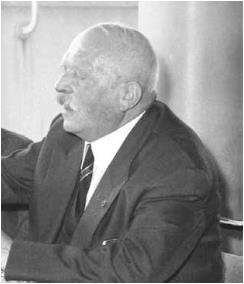
Benjamin SEMENOV

Semenov

Born Benjamin Petrovich Semenov-Tian-Shansky, this Russian researcher (1870-1942, portrait dating from 1940) is best known for his work in geography and economics during the 1920s and 1930s, the Soviet era. However, in his early years, he devoted himself to paleontology, having graduated with a degree in geology from Saint Petersburg State University in 1893. For example, in 1895, he led an expedition to the Altai Mountains in Siberia to create a geological map. Semenov began his work on the paleontology of Mangyshlak (Kazakhstan) by studying the numerous fossils brought back by his colleague Andrussov during an expedition in 1887. He is best known for a substantial article of 178 pages and 5 plates (1899) on the fauna of the Cretaceous deposits of Mangyshlak, a synthesis that included many Albian fossils. This work, written in Russian, constitutes the first significant study of this region, predating those of Sinzow and then Saveliev. Semenov notably defined the new species Semenoviceras uhligi, michalskii, and pseudocoleonodum (the first of which is described on our website). He bequeathed an important fossil collection to the Paleontological Museum of Saint Petersburg.


Ivan Fedorovitch SINZOW

Sinzow

Born in 1845, Sinzow was a highly cultured Russian paleontologist who defended his doctoral thesis in geology in 1872 at the University of Novorossiysk, a major port city on the Black Sea. He published 62 works, including a detailed geological map of the Saratov region on the Volga River (1888). Trilingual, he wrote primarily in Russian, but also in German and occasionally in French. He conducted extensive research on the Cretaceous period in southern Russia (Saratov, Odessa, etc.), the North Caucasus, and the Mangyshlak region (Kazakhstan). In a 1907 article in German on the Aptian-Albian of Mangyshlak, he defined the Aptian genus Acanthohoplites and new Albian species, such as Cleoniceras (Neosaynella) platidorsatum, Protohoplites (Protohoplites) latisulcatus, Sonneratia media, S. grandis, S. tenuis, and S. sexangula. The last three are described on our website. Some of his species of Sonneratia have since been transferred into the genera Arcthoplites and Tetrahoplites, for example Arcthoplites jachromensis, Tetrahoplites rossicus and Tetrahoplites subquadratus (the two Tetrahoplites are also the subject of a sheet on this site).

Comments. Even though most of the ammonites have been revised since, the 1907 article is invaluable because the photographic plates include species never depicted again. I thank Laurent Zimmer of Lithologia, who had a tough time translating Sinzow's descriptions for me, which he told me were written "in an old-fashioned 19th-century German".


Leonard Frank SPATH

Spath

Spath (1882-1957) was the greatest ammonitologist of the 1920s to 1950s. A tireless and solitary worker, he detested social events to the point of rarely attending meetings of sceintific societies and congresses. He earned a meager living from a series of temporary jobs at the British Museum (where he refused a permanent position), and from teaching geology at Birkbeck College, University of London, where he was very popular with the students. At least this left him plenty of free time for paleontology! After receiving his doctorate in geology in 1921, his best-known publications concerned the Jurassic of Kutch in India (1927-1933) and especially A Monograph of the Ammonoidea of the Gault, in 2 volumes and 16 parts (1923-1943). He also studied African faunas (Angola, South Africa, Mozambique, Tunisia, Kenya, Tanzania) and Greenland. Following in the footsteps of Jacob in France, this astute observer significantly developed the systematics of Albian ammonites and created many new genera and species. For example, he defined almost all the species of Euhoplites.

Comments. The monograph on Gault ammonites is the most comprehensive reference work on the ammonites of the Middle and Upper Albian of the Anglo-Paris Basin, with an abundance of photographic plates and measured specimens. It is an impressive and very useful work, of which I am fortunate enough to own both original volumes. However, it does not cover the ammonites of the Lower Greensand of England, for which one must consult Casey. The revisions published since must be taken into account: for example, Amédro, Casey, and Kennedy simplified parts of his work, grouping some species and writing clearer diagnoses. Spath has been criticized for his literary and verbose, even precious, style, whereas a more technical and precise style is expected of a scientist. He is also the very type of researcher who multiplies "species" based on sometimes minor differences.


Claud William WRIGHT

Wright

Claud William Wright (1917-2010, portrait from 1988) was a senior British civil servant who pursued a career in the Ministry of Defence and later of Education. During his studies at Oxford, he was introduced to paleontology by Arkell. He quickly achieved international prominence and became president of the Geologists' Association from 1956 to 1958. Upon his retirement from the civil service in 1976, he devoted himself fully to paleontology, first as a research fellow at Wolfson College, Oxford University (1977-1983), and then as a research associate at the British Museum. He studied mainly the Cretaceous period in England: ammonites, but also sea urchins, starfish, and fossil crabs. He wrote more than 150 publications between 1932 (at the age of 15!) and 2003. The best known is the volume on Cretaceous ammonites of the Treatise of Invertebrate Paleontology (1996) and, with Kennedy, The Ammonoidea of the Lower Chalk in 5 volumes (1984-1996). His publications on the Albian cover the Upper Gault of Aylesbury (1939), the Lower Albian of Leighton Buzzard (1942, 1947), the Farnham beds (1942), the Late Albian of Dorset (1945), the evolution of Desmocerataceae and Hoplitaceae (1955), and the genera Umsinenoceras (1979) and Stoliczkaia (1994). He amassed an enormous collection, currently assigned to the Natural History Museum (formerly the British Museum - Natural History) and the Oxford University Museum.

Comments. Beginners to whom I recommend Wright's Treatise are often disappointed because they expected to find species names for their specimens. This book is primarily an excellent summary presenting the classification of Cretaceous ammonites, with definitions of suborders, superfamilies, families, genera, and subgenera, accompanied by numerous illustrations. It does allow you to identify the genus of a specimen, which is already quite helpful. Determining the species then requires extensive documentation — in my case, eight 90cm shelves, plus hundreds of electronic publications on my PC!


Keith YOUNG

Young

Keith Preston Young (1918–2004) received a Ph.D. in geology from the University of Wisconsin–Madison in 1948. He then joined the University of Texas at Austin, where he spent his entire career, primarily studying North American Cretaceous stratigraphy and ammonite paleobiology. He continued his research as an emeritus professor after his retirement in 1988. He authored over 100 publications and compiled field guides and fossil specimen databases. His contributions on the Albian include the ammonites of the upper Albian of Texas (1957, 1968), those of the lower Albian (1974), the Texan Mojsisovicziinae such as Oxytropidoceras (1966), the stratigraphic correlations between the formations of Texas and Mexico (1979), the Lyelliceratidae of these two regions (1979), and the genus Hysteroceras (1984). The extensive 1966 report (232 pages) is very interesting because it presents 29 species from the Upper Albian of Texas, most of them endemic. The Oxytropidoceras described include 4 species of the subgenus Adkinsites (2 of which are new), 6 of the subgenus Venezoliceras (3 of which are new), 5 of the subgenus Oxytropidoceras (3 of which are new), and 10 of the genus Manuaniceras (6 of which are new). Four species of Dipoloceras are also discussed.

Comments. I found 14 journal articles and memoirs of which he is the author or co-author, but no exhaustive list of his publications.